What Is Hydrogen Water? Benefits, Myths & How ppb Is Measured
Kamal, Founder of BelieveUpdated 5 Oct 20267 min read
Quick answer
Hydrogen water is ordinary drinking water with extra dissolved molecular hydrogen (H₂), measured in parts per billion (ppb). It is made by electrolysis, either in a home ionizer or a portable bottle. Fresh hydrogen water typically reads several hundred to over a thousand ppb; hydrogen escapes over time, so it is best consumed fresh.
How hydrogen gets into water
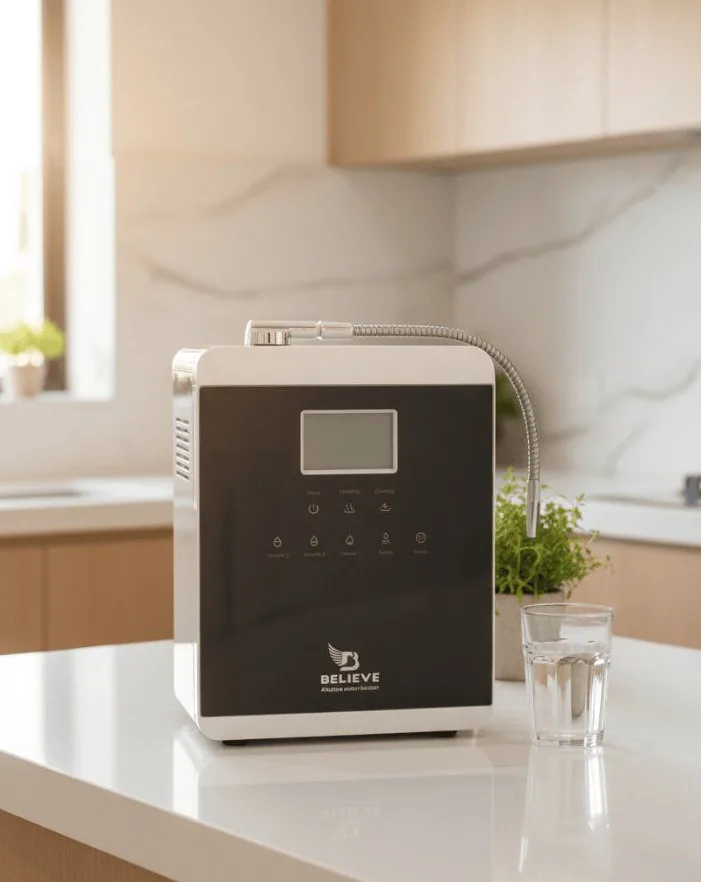
During electrolysis, water passing over charged plates splits into streams. At the cathode (negative plate), hydrogen gas forms as tiny bubbles and dissolves into the water. That is why Believe water often looks slightly milky with micro-bubbles for a few seconds.
What does ppb mean?
ppb means parts per billion: 1,000 ppb equals 1 milligram of hydrogen per litre. Because hydrogen is the lightest molecule, even small amounts are meaningful. Believe’s ionizer produces roughly 800–1,200 ppb, shown live on the display.
Common myths
- Myth: hydrogen water is a cure-all. Reality: think of it as a better daily hydration habit, not a medicine.
- Myth: it stays hydrogen-rich for days. Reality: H₂ escapes within hours, so drink it fresh.
- Myth: all ionizers make the same amount. Reality: plate count, design and input water all change output.
Key takeaways
- Hydrogen water = water + dissolved H₂ gas, measured in ppb.
- Electrolysis is the most common way to make it at home.
- H₂ escapes quickly, so drink it fresh.
- Believe shows the live ppb on the ionizer display.
Frequently asked questions
Is hydrogen water safe?
Hydrogen water is simply drinking water with dissolved hydrogen gas. Use clean drinking water and follow product instructions. Consult your doctor for any medical condition.
Bottle or ionizer?
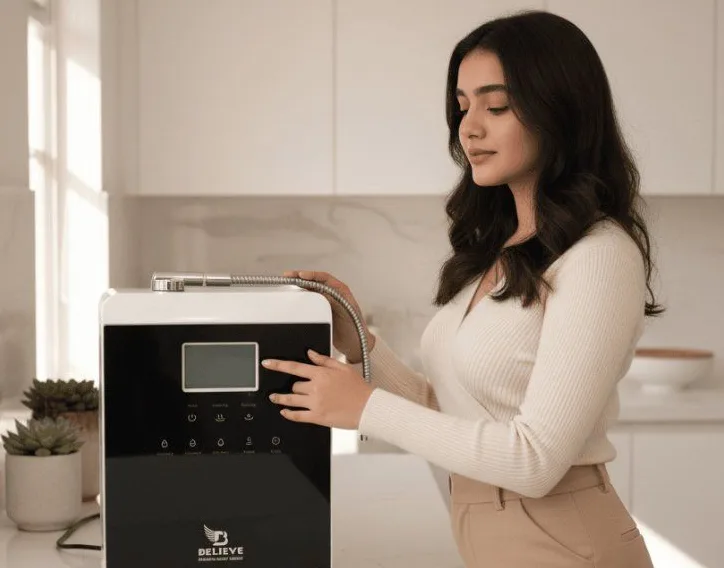
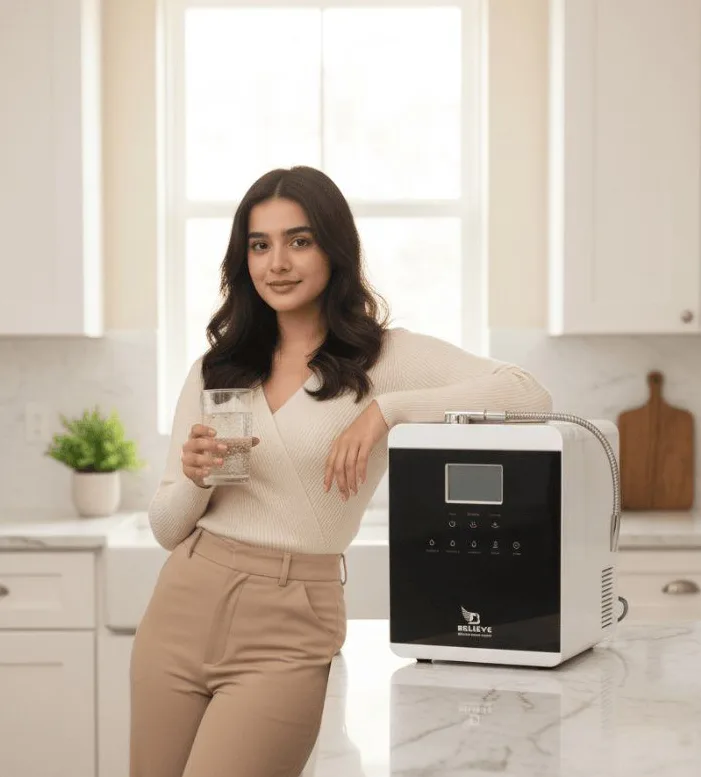
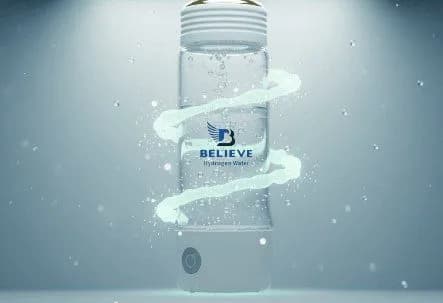
An ionizer covers the whole family at home with 7 water types; a bottle gives you hydrogen water on the go. Many families use both.