Alkaline Water vs Mineral Water vs RO Water: What’s Actually Different?
Kamal, Founder of BelieveUpdated 9 Dec 20257 min read
Quick answer
RO water is purified: most dissolved salts are removed, leaving it clean but slightly acidic (pH around 5.5–6.5). Packaged mineral water comes from a natural source and contains naturally dissolved minerals, usually with a near-neutral pH. Alkaline water has a pH above 7, either from added minerals or, in an ionizer, from electrolysis, which also adds dissolved hydrogen and lowers ORP. They are not interchangeable: they differ in pH, mineral content, ORP and cost.
RO water: clean, but stripped
Reverse osmosis pushes water through a membrane so fine that it removes most dissolved salts, metals and microbes. In Haryana and NCR, where groundwater often has high TDS, RO is genuinely important. The trade-off is that RO also removes calcium, magnesium and bicarbonates, which is why RO water usually tests slightly acidic and tastes “flat” to many people.
Packaged mineral water: what’s on the label
Under Indian food regulations, natural mineral water must come from a protected underground source and keep its natural mineral composition. “Packaged drinking water” is different: it is treated water, often RO plus added minerals. Check the label: the two are not the same product.
Alkaline water: two very different methods
- Alkaline cartridges or drops add minerals such as calcium or magnesium. pH rises a little; ORP and hydrogen usually do not change much.
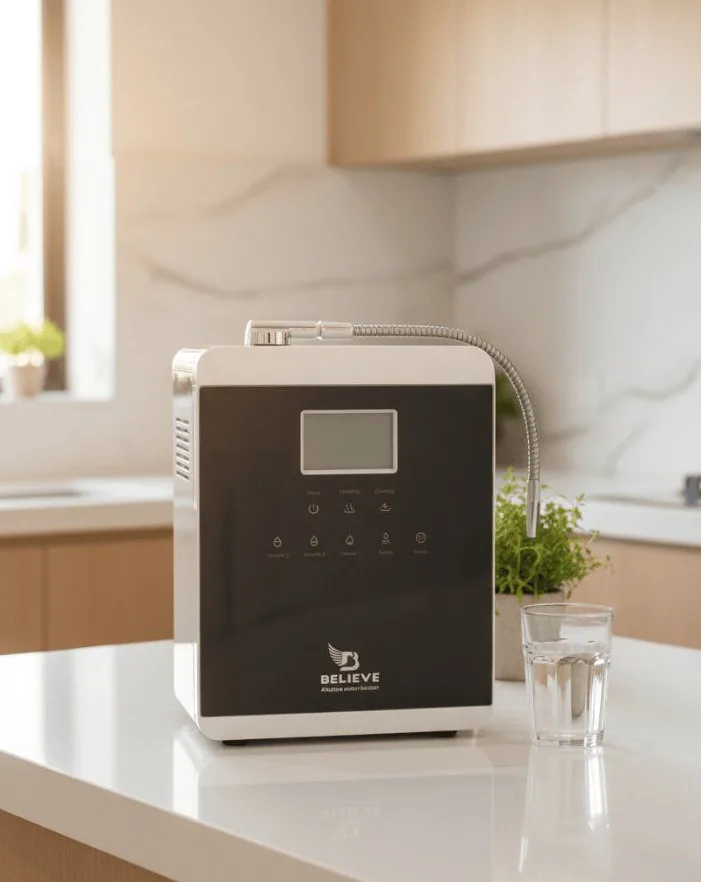
- Water ionizers use electrolysis. Water passes over charged plates and splits into alkaline and acidic streams. The alkaline side gains a higher pH, dissolved hydrogen and a negative ORP.
Side by side
| RO water | Mineral water | Ionized alkaline water | |
|---|---|---|---|
| Typical pH | 5.5 – 6.5 | 6.8 – 7.8 | 8.5 – 10.5 (adjustable) |
| Minerals | Very low | Natural, varies by source | From your RO input water |
| Dissolved hydrogen | None | None | ~800–1,200 ppb (Believe) |
| ORP | +200 to +400 mV | Positive | −200 to −400 mV |
| Cost per litre | Very low | ₹15–30+ | Very low after purchase |
| Plastic waste | None | Yes | None |
So which should your family drink?
If your groundwater is high in TDS, keep your RO: purification comes first. On top of that, the choice is about what you want from your daily water. If you like a smoother taste, warm water on demand and a measurable pH and hydrogen level, an ionizer after your RO gives you that at home without buying plastic bottles. Mineral water is a fine travel option, but an expensive daily habit.
Key takeaways
- RO = purification. Mineral water = natural source minerals. Alkaline = higher pH.
- Ionized alkaline water also contains dissolved hydrogen and has a negative ORP.
- Alkaline cartridges add minerals; ionizers change pH through electrolysis.
- Packaged water costs 50–100× more per litre than water made at home.
Frequently asked questions
Is RO water bad for health?
No. RO water is safe to drink. It is simply low in minerals and slightly acidic. A balanced diet provides most of the minerals your body needs.
Is mineral water the same as alkaline water?
Not necessarily. Most mineral waters are close to neutral pH. Only some are naturally alkaline, and none contain the dissolved hydrogen produced by an ionizer.
Can I make alkaline water with baking soda?
Baking soda raises pH, but it adds sodium and does not add hydrogen or change ORP the way electrolysis does. It is not a good daily habit, especially for people watching their salt intake.