How to Maintain a Water Ionizer: Cleaning, Filters and Long Life
Kamal, Founder of BelieveUpdated 27 Jan 20265 min read
Quick answer
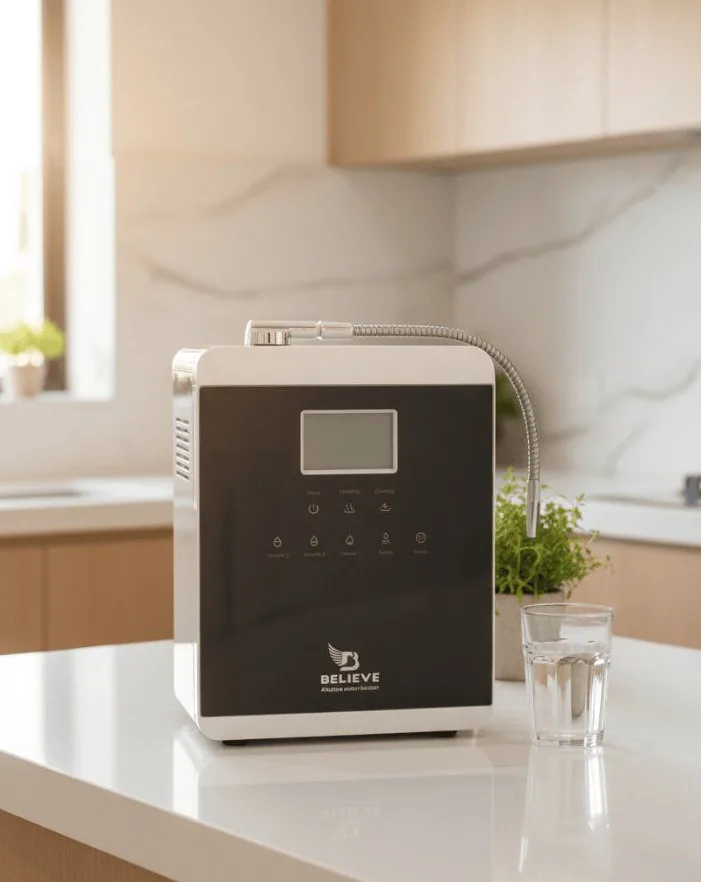
Most ionizer care is automatic: a good machine runs a self-cleaning cycle to stop minerals building up on the plates. Your part is simple: wipe the exterior weekly, keep the input RO water in the recommended TDS range, replace the pre-filter on schedule, and book a service check about once a year. Avoid harsh chemicals and never run the heater without water.
Your maintenance calendar
| How often | What to do |
|---|---|
| Daily | Run water for a few seconds before filling a glass |
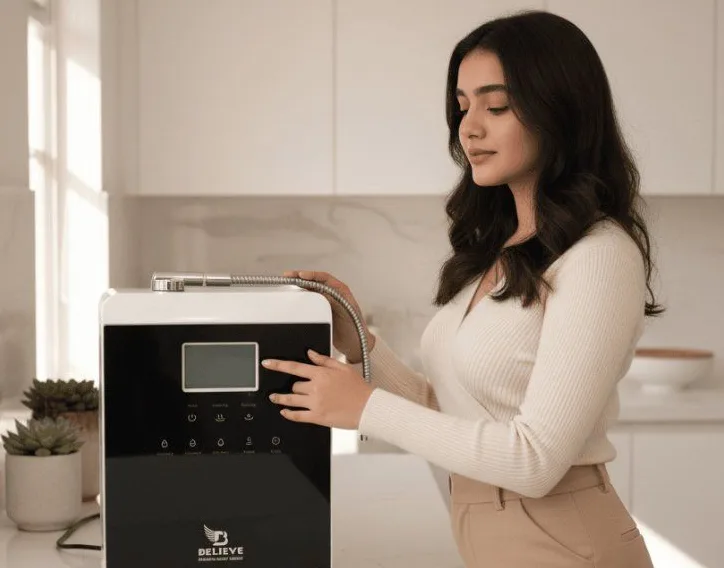
| Weekly | Wipe the body and spout with a soft damp cloth |
| Monthly | Check your RO output TDS with a meter |
| As indicated | Replace the pre-filter when the display or technician advises |
| Yearly | Book a service check: plates, flow, pH and hydrogen output |
Why input water matters so much
Very hard or high-TDS water leaves scale on the electrolysis plates, which reduces output over time. Very low TDS water makes electrolysis inefficient. Keeping your RO output in the recommended range protects the plates and keeps pH and hydrogen readings strong.
Do’s and don’ts
- Do keep the unit away from direct sunlight and stove heat.
- Do use the acidic setting to clean the spout and glasses.
- Don’t use bleach or abrasive cleaners on the body or display.
- Don’t run hot water settings if the supply is off; Believe’s anti-dry protection guards against this, but avoid it anyway.
- Don’t open the unit yourself. Call service; it protects your warranty.
When to call service
Call if hydrogen or pH readings drop noticeably, flow becomes weak, the unit shows an error, or water tastes unusual. Believe customers can raise a request on our Support page or call +91-7015517802.
Key takeaways
- Let the automatic cleaning cycle run; don’t interrupt it.
- Input water quality protects the plates: keep RO TDS around 100–150 mg/L.
- Replace the pre-filter on schedule.
- An annual service check keeps output and warranty on track.
Frequently asked questions
How long do ionizer plates last?
With good input water and automatic cleaning, platinum-coated titanium plates are built for many years of daily use.
What happens if I skip the filter change?
Chlorine and organics can reach the plates and reduce performance. Follow the schedule your technician gives you.